Interior Design Builder
Bridging the gap between AI capabilities and real designer workflows through intuitive image generation.
Discovery Insight
78% of interior designers spend 2+ hours per project creating mood boards manually.
User Pain Point
Generic AI tools don't understand terms like "mid-century modern" or "japandi" aesthetics.
Opportunity
A specialized tool could reduce concept visualization time from hours to minutes.
1Problem
Designers waste hours translating client ideas into visual concepts. Existing AI tools require extensive prompt engineering and produce inconsistent results that don't match professional interior design standards.
2Goal
Create an AI tool that speaks designer language. Enable professionals to generate high-quality interior visualizations in seconds using intuitive controls and design-specific parameters.
3Solution
A specialized image generator with pre-built design style presets, room type templates, and material/color controls that produce client-ready visualizations without complex prompt crafting.
Beyond simple image generation
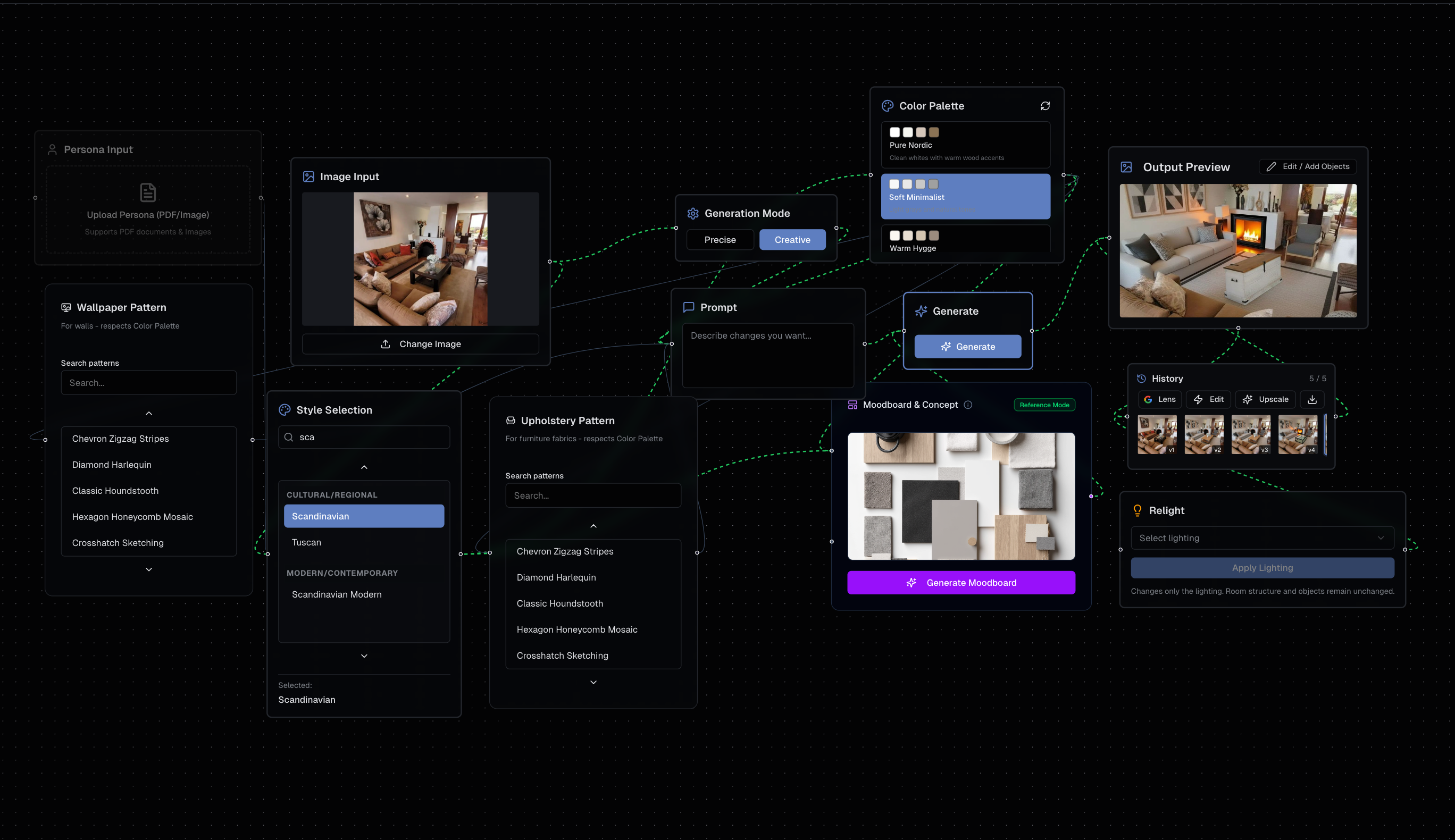
Persona Input Analysis
The standout feature: upload a PDF with your user persona research, and the AI analyzes demographics, preferences, and lifestyle data to automatically suggest the perfect design style palette.
- →PDF parsing with natural language processing
- →Automatic style recommendations based on persona traits
- →Design decisions backed by user research, not guesswork
AI Moodboard Generator
Generate complete moodboards with cohesive color palettes, material textures, furniture suggestions, and lighting references—all from a single style direction.
- →Automatic color harmony extraction
- →Material and texture pairing suggestions
- →Export-ready layouts for client presentations
Relight Engine
Transform any generated or uploaded image with different lighting scenarios: natural daylight, warm evening ambiance, dramatic accent lighting, or cozy candlelit atmospheres.
- →8 preset lighting scenarios
- →Custom light source positioning
- →Before/after comparison mode
Image Input Refinement
Upload an existing space photo and transform it with new styles while preserving the room's structural elements. Perfect for renovation visualization.
- →Structure-aware style transfer
- →Selective element preservation
- →Multiple variation generation
From research to shipped product in 3 weeks
Research & Discovery
- →Interviewed 5 interior designers about their current workflow and pain points
- →Analyzed 12 existing AI image tools to identify gaps in the market
- →Created user journey maps for the concept visualization process
- →Defined core features based on frequency of need and impact on workflow
Design & Prototype
- →Sketched 20+ UI concepts focusing on minimal friction for expert users
- →Designed component library with design tokens for rapid iteration
- →Built interactive Figma prototype for early user testing
- →Validated control hierarchy with 3 designers before development
Build & Launch
- →Developed full application using Next.js, v0, and Cursor AI assistance
- →Integrated Fal AI for image generation with custom prompt engineering
- →Implemented style presets (15 design styles) and room templates (8 types)
- →Deployed to production with analytics for continuous improvement
Intentional choices that shaped the product
Style Presets over Free Prompts
Instead of relying on users to craft perfect prompts, I created curated style presets that map to professional design terminology.
Progressive Disclosure
Basic controls visible by default, advanced options hidden behind expandable panels. This reduces cognitive load for quick tasks while enabling power user workflows.
Real-time Preview System
Users see a low-resolution preview in 2 seconds before committing to full generation. This saves API costs and allows rapid iteration on parameters.
Export for Client Presentation
One-click export to PDF mood boards with customizable layouts. Designed for the actual deliverable designers need to share with clients.
What I shipped and what I learned
Key Takeaways
- 01.Domain expertise matters more than technical sophistication. Understanding interior design terminology was as important as the AI integration.
- 02.AI tools should reduce friction, not add it. Presets and templates outperform blank canvases for professional users.
- 03.Ship fast, learn faster. The 3-week timeline forced focus on core value rather than feature creep.
- 04.Persona-driven design isn't just for users—building the Persona Input feature reinforced how powerful research-backed decisions are at every level.
Built with modern tools
Want to see it in action?
I'd love to walk you through the full project and discuss how I approach AI-powered design tools.